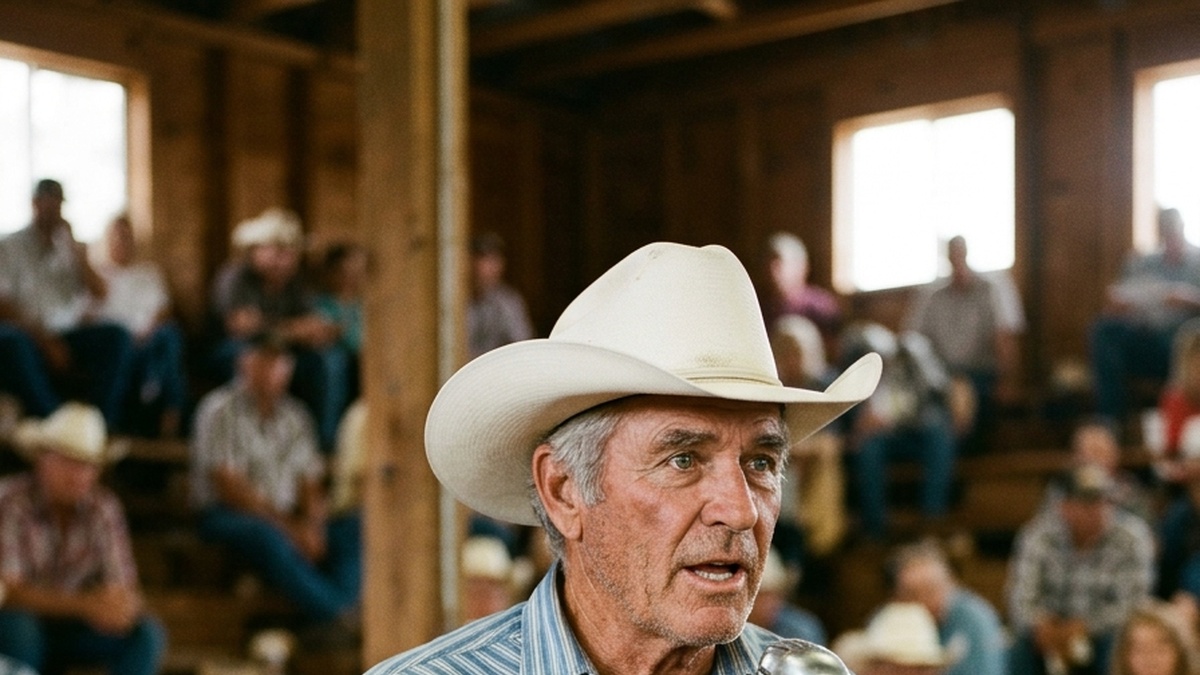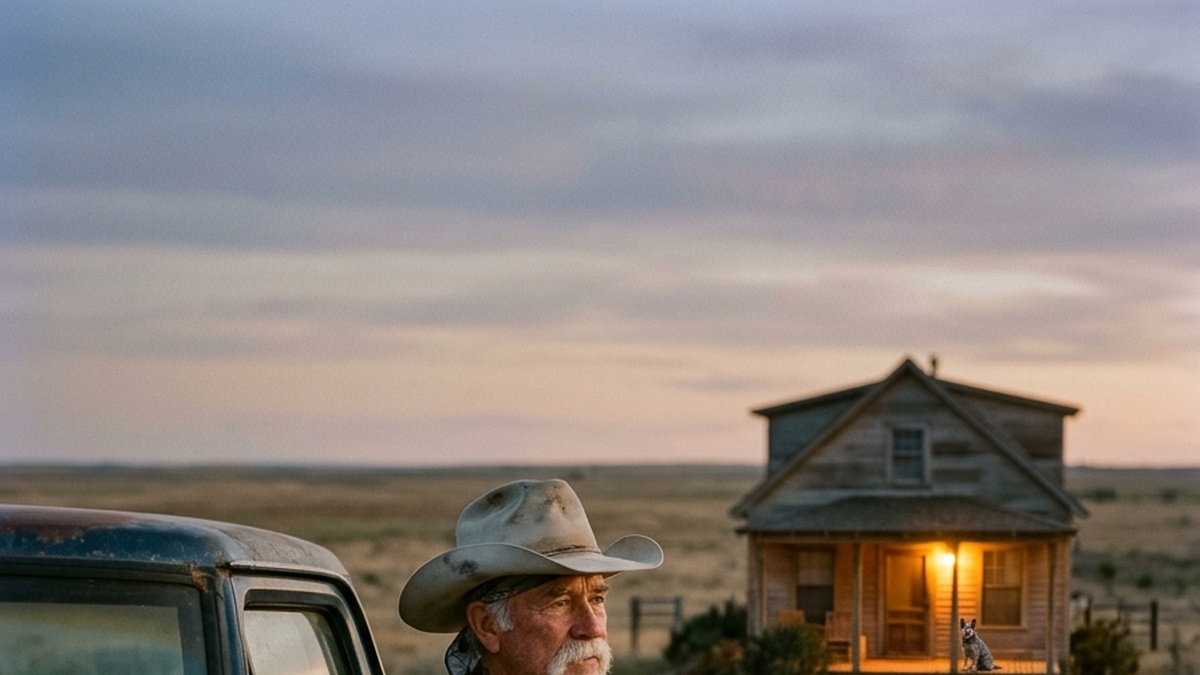
Wendell was seventy-four, with a bad knee and a heart doctor in Amarillo who would not have approved of what he did next.
He went back to his pickup for the big flashlight and the wool blanket he kept behind the seat. Then he went out into the pasture after her.
The wind was bad. It was going to be fifteen degrees by midnight. A sixteen-year-old in a T-shirt would not last long out there, and Rae did not know this pasture the way Lyle had.
Wendell did.
He knelt in the lee of the house and put the flashlight low to the ground, so the beam ran flat across the dirt. Her sneaker prints jumped out at him, sharp-edged and fresh, with Pistol's paw prints scattered alongside. In ten minutes the wind would fill them in. Right now, they were as plain as writing.
He followed them.
She had run straight north at first, away from the house. Then the prints turned east, the way a scared person turns when the wind is in her face. They zigzagged. In one place she had fallen and pushed herself up, and he could see the marks of both hands.
Wendell kept the light low and kept walking. Dust stung his eyes and got in his teeth. He talked out loud the whole time, the way he used to on night calls, because it kept him steady.
"Come on, Rae. Come on, now. Stay on your feet."
The prints led toward the old caliche pit at the east fence, where Lyle used to dig road base. Wendell knew there was a twelve-foot drop on the far side of it.
He walked faster.
At the edge of the pit, the tracks stopped. Wendell's heart stopped with them. Then he swung the light to the left and saw Pistol, crouched in the shelter of a cutbank, barking at him. Behind the dog, curled up in the hollow of the bank with her arms around her knees, was the girl.
"Rae," Wendell said. "My name's Wendell Haynes. I was Lyle's friend. I'm not going to hurt you, and I'm not here to take you anywhere you don't want to go. But it's going to be fifteen degrees tonight, honey. Let's get you warm."
She stared at him over her knees. Her lips had gone blue.
"You're the sheriff," she said.
"Not anymore. They made me quit." He held out the blanket. "Now I just feed dogs and drink coffee."
She did not move for a long moment. Then Pistol licked her face, and she laughed, a small cracked sound, and she reached out and took the blanket.
He got her back to his pickup with the heater running full blast. She sat wrapped in the blanket with Pistol across her lap and told him the whole thing in a flat, tired voice.
The couple moving to Lubbock. The caseworker's talk about Amarillo. The key Lyle had given her the winter before, in case she ever needed somewhere to do her homework. How she had been sleeping in his house for three weeks, riding her bike to school, cleaning houses on Saturdays for gas money she paid to the neighbor who drove her to the store.
"I didn't break anything," she said. "I didn't take anything. I just didn't want to leave school. And somebody had to feed Pistol."
"I know," Wendell said. "I saw your list."
She told him she had a C-plus in algebra and an A in English, as if those were the two most important facts in the world. Wendell thought maybe they were.
He called Cody Ruiz from the café at eight the next morning. Then he called the caseworker in Amarillo, a woman he had worked with for fifteen years. Then he called Pastor Ben Whitley, whose wife had been asking the Lord for some useful work since their youngest went off to Texas Tech.
It took three weeks and a stack of paperwork as tall as a coffee can. But by Christmas, Rae Dawson was living in the Whitleys' spare room, two miles from Caprock Springs High School. The caseworker said she could stay through graduation.
Cody stopped by Wendell's booth at the café one morning in December and sat down without asking.
"Squatter," he said, and shook his head. "I'd have gone out there with a flashlight and a pair of cuffs."
"You'd have figured it out," Wendell said.
"Maybe." Cody turned his coffee cup around. "How'd you know?"
"She washed her spoon," Wendell said.
Cody looked at him for a moment. Then he laughed, and shook his head, and laughed again.
"Twenty-eight years," he said. "And that's the clue."
"Sometimes it's the only one you get," Wendell said. "A thief doesn't wash a spoon in an empty house. A girl who washes her spoon is trying to leave a place the way she found it. That's not a burglar, son. That's a guest who's afraid she isn't welcome."
The Haskell house sold at auction the second week of December, to a young couple from Plainview with a baby. Wendell bought Pistol for a dollar, because the nephew in Dallas said somebody ought to pay something.
The old dog slept on Wendell's porch now. Rae rode her bicycle out on Saturdays to see him and do her algebra at Wendell's kitchen table.
Every evening at dusk, Wendell turned on his own porch light and left it burning, for anybody coming down that farm road in the dark who needed a place to stop.